
Among the oldest and most cherished forms of prayer are the Rosary and the Litany. To these should be added personal meditation on the lives of Jesus, Mary and the saints, as well as the traditional religious hymns that people once sang at home, along the pilgrimage route and in church.
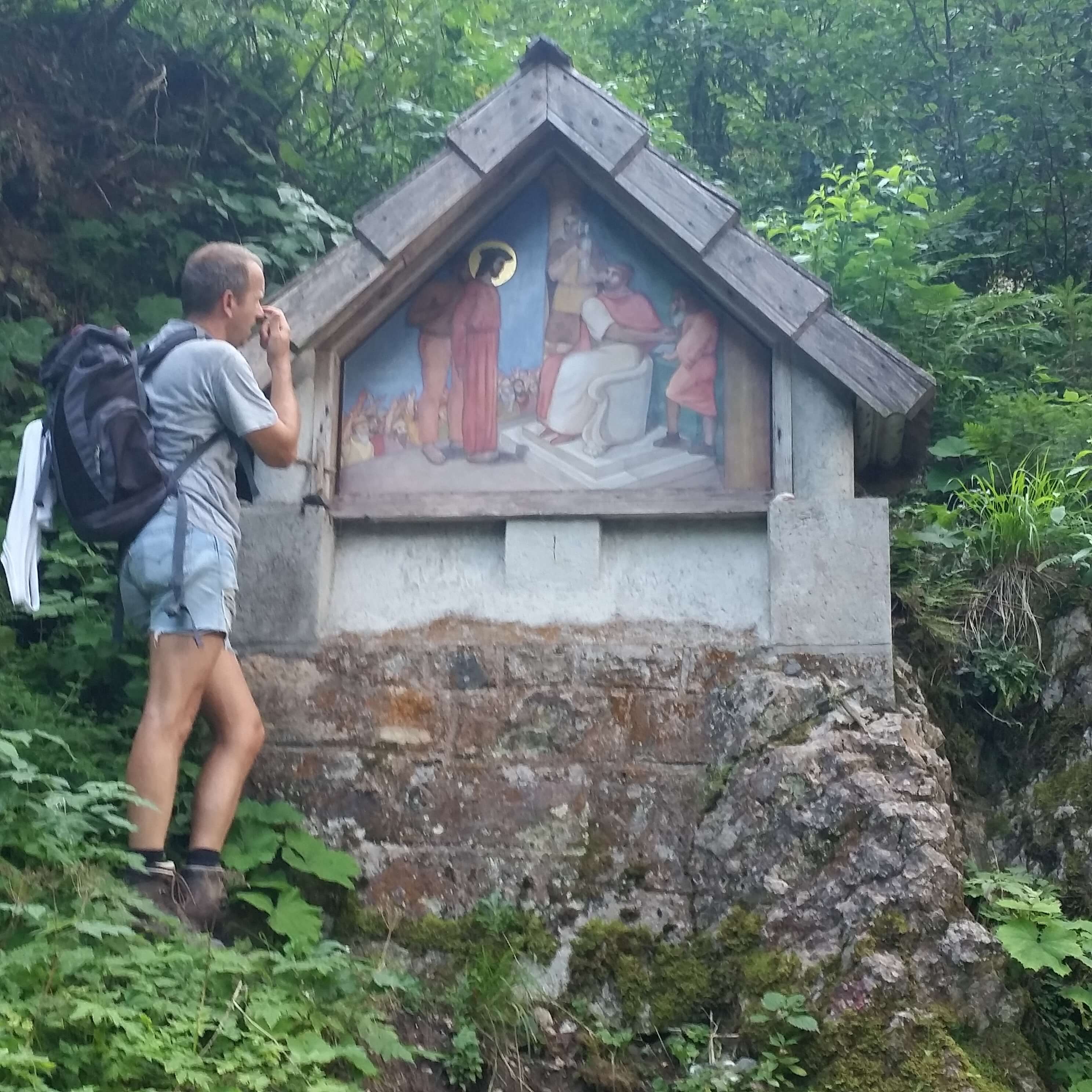
The local people began building the Way of the Cross during the uncertain years following the First World War, completing the first six stations. The outbreak of the Second World War interrupted the work, which was never resumed after the conflict ended. The artist Tone Kralj painted all the Stations of the Cross. Since 1960, the original paintings have been kept inside the church at Mount Lussari, both because the outdoor masonry stations were never completed and to protect the paintings from rain and snow. In 2015, the local community revived the project by installing faithful reproductions of Kralj’s originals along the pilgrimage path, while the original paintings remain safely preserved inside the church.
***
The original plan envisioned the Way of the Cross beginning high on the mountain, beside the pilgrims’ path, at the place where firewood for Mount Lussari was stored. Pilgrims were invited to carry a piece of wood with them up to the parish house as an act of service. According to that plan, the Way of the Cross would have ended at the small chapel beside the spring below the mountain farm. The 2015 project adopted a different approach, placing the remaining eight stations at greater distances from one another, with the Way of the Cross now concluding at the Chapel of the Sacred Heart of Jesus. This also makes the final two stations easily accessible to pilgrims arriving by cable car.